

Technology Advances Military Paramedicine
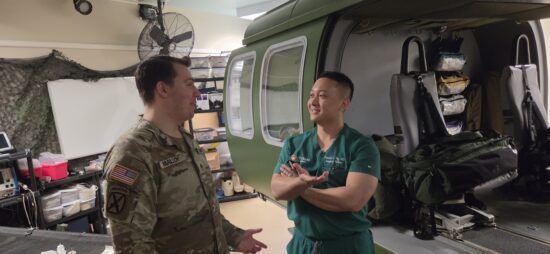 October 14, 2026 – Drs. Patrick, NG, MD, and Robert De Lorenzo, MD toured the Critical Care Flight Paramedic Program at JBSA-Ft Sam Houston, Texas. The tour was hosted by Staff Sgt. Braxton D. Malloy, AAS, NRP, FP-C, CCP-C, Noncommissioned Officer in Charge, and Maj. Ryan Sinteff, RN, Program Director. The training program is housed in the historic U.S. Army Medical Center of Excellence (MEDCoE) building and is one of several military paramedic programs in the Department of Combat Medicine. Soldiers, sailors and airmen form all three military services are eligible to take the course. Among the tour highlights was a mockup of a UH-60 Blackhawk helicopter which is used for casualty evacuation, and a mockup of a Forward Resuscitative Surgery Detachment, capable of damage control surgery in far forward austere locations. Both are used to train the critical care paramedic students in the art and science of intensive care.
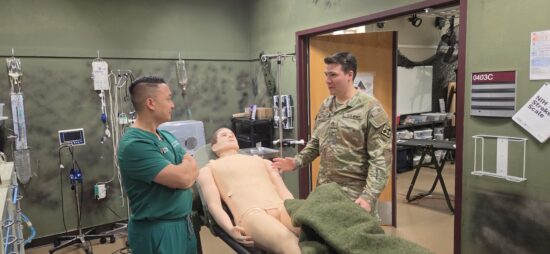
The Critical Care Flight Paramedic Course is designed for certified flight paramedics and consists of two weeks of classroom didactics (pharmacology, pathophysiology, and enroute critical care) plus six weeks of practical experience in hospital ICUs, ground ambulances, and the Transport Medical Training Laboratory. Emphasized in the course and a point of discussion during the tour was the use of high technology to sustain patients suffering war wounds and critical conditions.
The tour was especially poignant for Dr. De Lorenzo, a retired Army physician who was the chief architect of the modern combat medic. In 2000, when he was an active-duty Major, he designed and launched the 68W (then called 91W) combat medic, which is the foundational medical training program for flight paramedics. Courses like the Critical Care Flight Paramedic Program represent a quarter-century journey by the Army to increase the training and capability of combat medics, applying high-technology to save lives on and off the battlefield.