

Research Times Newsletter
Research Spotlight for July

Andrea Garcia is a Research Assistant working alongside Dr. Riviello on the landmark OASIS study. In this role, Andrea manages key operational and patient-facing dimensions of the clinical trial, contributing to the study’s ongoing tracking of long-term patient outcomes, treatment efficacy, and safety data. Driven by a commitment to advancing evidence-based patient care, Andrea plays an integral part in supporting Dr. Riviello’s research team and ensuring data integrity throughout the lifecycle of the study.
Get Involved
The next quarterly issue will highlight a member of the research team and the studies they are currently working on.If you would like to be featured in the newsletter with a current study or article, please send your submission to Patricia Sanchez via email.
Optimizing Acute Stress Reaction Interventions (OASIS)
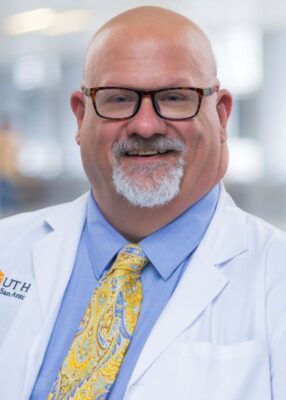
The Department of Emergency Medicine is a participating site in the study, “Prevention/Reduction of Acute Stress Reactions and PTSD to Sustain Civilian Performance with Sublingual Cyclobenzaprine HCl (TNX-102 SL), also known as Optimizing Acute Stress Reaction Interventions with TNX-102 SL (OASIS). This multicenter trial is sponsored through the Department of Defense and Tonix Pharmaceuticals with the primary site through the Institute for Trauma Recovery at the University of North Carolina. Other noted sites include, Washington U, St. Louis; University of Massachusetts, Indiana University, Rhode Island Hospital, Miriam Hospital, University of Kansas.
The primary objective of the study is to evaluate the safety and efficacy of TNX-102 SL to reduce acute stress reaction/acute stress disorder after a motor vehicle collision. The secondary objective is to evaluate the efficacy of TNX-102 SL to improve neurocognitive function and prevent posttraumatic stress symptoms after MVC.
The same ASR/ASD/PTS symptoms that occur in service members during deployment/combat occur in civilians presenting to trauma center EDs for care after motor vehicle collision (MVC). In the AURORA Study 3800 civilians presenting to ED after MVC were studied. Results showed:
>50% experienced dizziness, trembling, light sensitivity, noise sensitivity, impaired thinking and concentration, restlessness and insomnia in the early aftermath of MVC;
Sxs often persisted for weeks;
50% had ASD Sxs at 2 weeks;
27% had substantial PTS @ 3mos;
Acute and chronic MSK pain were common.
In addition to benefiting service men and women, medications which reduce acute and chronic posttraumatic stress symptoms could greatly benefit US civilians. TNX-102 SL (cyclobenzaprine HCl sublingual tablet) is being developed for the management of fibromyalgia (FM), and post-traumatic stress disorder (PTSD) by Tonix Pharmaceuticals, Inc. TNX-102 SL has demonstrated the ability to improve sleep quality, which, based on published clinical studies of fear memory and stress responsiveness, has been shown to play a significant role in stress recovery. To date, TNX-102 SL has undergone an intense nonclinical and clinical development including Phase 1, 2, and 3 studies that assessed safety in over 1,180 subjects. Of note, this is a different dosing and route of administration than typical cyclobenzaprine.
Eligible participants are between 18 and 55 years of age, seen in the ED within 48 hours of MVC, who will be discharged from the ED. Interested patients will be screened for inclusion and exclusion criteria, have labs and EKG performed, and various standardized surveys and neurocognitive assessments. They will be randomized to placebo or treatment groups. In the treatment group, they will receive TNX-102 SL nightly for 2 weeks. During the next 12 weeks will have various adverse event assessments, smartphone flash surveys, standardized surveys, and neurocognitive assessments. Participants will be compensated for their participation. Dr. Riviello is serving as PI.
Field Operations Research Clinical Engine (FORCE)
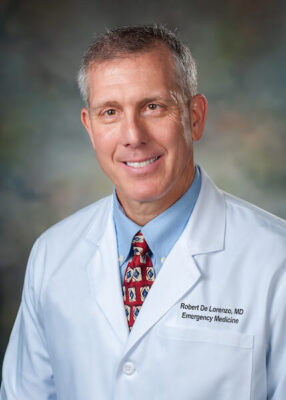
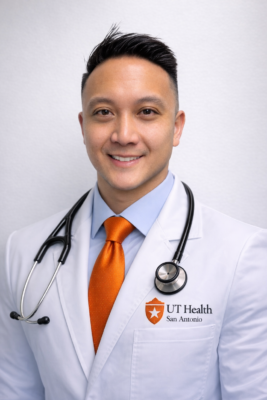
FORCE – Field Operations Research Clinical Engine, led by Drs. Robert De Lorenzo and Patrick Ng, was selected for TRC4 funding in the FY2026 cycle. The primary objective of FORCE is to build a pre-hospital clinical research platform to investigate ways to mitigate delays to treatment in rural and austere prehospital settings. Time to lifesaving interventions can be delayed in both civilian and military populations, especially in austere and remote environments (i.e., rural Texas), therefore we are looking to partner with both rural and military providers in addition to urban and commercial agencies.
The project will occur in phases, starting with phase I, building the foundation, which includes seeking partnerships with EMS agencies (rural, urban, commercial, etc.), regional advisory councils and military stakeholders. We have successfully identified interested EMS providers and military stakeholders to be involved in phase I, and Dr. Ng recently presented the project objective at TRC4 2026 to promote the platform and gain interest from potential collaborators. In addition, we have selected two projects that we believe can be executed with this platform. Protocols and agreements are underway. This phase begins with identifying key resources, establishing agreements and implementing realistic projects. The goal is to establish the FORCE capability, scalable to other sites across Texas to conduct pre-hospital clinical research.
UT San Antonio’s University Excellence Award
effort to revolutionize endotracheal intubation and airway clearance through novel engineering approaches. The award recognizes their cutting-edge and cross-disciplinary technology designed to save lives in pre-hospital and emergency enforcements. The team was honored at the annual ceremony on April 28, 2026, and the award was given by university president Dr. Taylor Eighmy.