

Food: Favorite or Forgotten? How Executive Functioning Impacts Eating Habits
Overview:
Food: Favorite or Forgotten? How Executive Functioning Impacts Eating Habits
Sara Hamilton, PsyD
This presentation will explore how executive functioning deficits/differences (EFD) associated with ADHD, depression, and anxiety can impact eating habits resulting in disordered eating and eating disorders, which can then further impair executive functioning. The presentation will cover behaviors that can result from EFD, including overeating, undereating, and reliance on fast food (which can also then further impair executive functioning!). The impact of medications for these conditions on appetite will also be covered as many medications for these disorders are used for, or in spite of, their dramatic impact on appetite. I will also touch on the changes in attention span in different age groups in the general population over the past several years and how this may impact the eating habits of large groups of people for the foreseeable future.
After this presentation, attendees will be able to identify:
- Name at least 3 executive functioning skills that impact eating habits.
- Identify 3 eating behaviors that may stem from executive functioning impairments.
- Identify 3 psychiatric medications that may negatively impact eating behaviors in certain populations
Presenter:
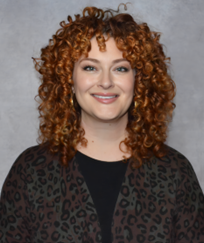
Sara Hamilton, PsyD
Director of Clinical Services
Bariatric Counseling Center of San Antonio
Financial Disclosures:
Sara Hamilton, PsyD, has no financial relationships with ineligible companies to disclose.
The Family & Community Medicine Professional Development and Grand Rounds Committee members (Maria Del Pilar Montanez Villacampa, MD, Stacy Ogbeide, PsyD; Yun Shi, MD, PhD; Mark Nadeau, MD, MBA; Fozia Ali, MD; Christine Camacho, MD; Richel Avery, MD; Nehman Andry, MD; Angelica Davila, MD; Nida Hussain, MD) have no financial relationships with ineligible companies to disclose.
Credits:
AMA PRA Category 1 Credits™ (1.00 hours), Non-Physician Participation Credit (1.00 hours)
Target Audience:
Specialties – Primary Care; Family Medicine
Faculty, residents, other health care providers and staff from our department; physicians and health care providers from San Antonio and South Texas; and medical students in our third-year clerkship and fourth year rotations.
Texas Medical Board of Ethics
This presentation meets the Texas Medical Board criteria for formal continuing medical education involving the study of medical ethics and/or professional responsibility.
Accreditation:
The University of Texas at San Antonio is accredited by the Accreditation Council for Continuing Medical Education to provide continuing medical education for physicians.
Credit Designation:
The University of Texas at San Antonio designates this live activity up to a maximum of 1.00 AMA PRA Category 1 Credits™.
Physicians should claim only the credit commensurate with the extent of their participation in the activity.
Nurses and other healthcare professionals will receive a Certificate of Attendance. For information on applicability and acceptance, please consult your professional licensing board.
View Recording (CME Credit)
View Recording (no CME Credit)
For activity related questions, please contact:
Name: Kelsi Sexton Barajas- TAFP FCM Grand Rounds Coordinator
Email: sextonk@uthscsa.edu
For CME general questions, please contact
Ph: (210) 567-4445
Email: cme@uthscsa.edu