

Residency
*** We will be accepting applications through the AAMC’s computerized ERAS (Electronic Residency Application System) for July 2027 on September 23rd, 2026.***
Program Aims:
Our program is designed to provide trainees with the skills, knowledge base, and sound clinical judgement to become competent, effective, well-rounded, and successful general pathologists who can practice both anatomic and clinical pathology in either academia or private practice.
Provide interested trainees with the knowledge, opportunities, and resources for scholarly activity needed to be competitive in pursuing subspecialty fellowship training and/or an academic career.
Residents are mentored in order to foster confidence, self-awareness and personal growth. Residents are also encouraged and supported to pursue research interests by providing ample time and funding to present findings at national and regional meetings.
Prepare trainees to be able to guide efficient and effective utilization of laboratory and/or hospital resources in diverse healthcare systems within a teamwork environment.
Our residents have diverse backgrounds and are trained to marry their previous skills with newly acquired knowledge while giving them the opportunity to build confidence by providing teaching opportunities to fellow residents and medical students. The program’s curriculum is also flexible enough to be tailored to individual educational and career goals.
Overview:
The pathology residency program at UT San Antonio is a four-year, combined Anatomic and Clinical Pathology program. The overall goal of the Pathology Residency Program is to provide comprehensive training in the practice of pathology and laboratory medicine.
The training program provides an appropriate balance between service obligations and educational opportunities. The residents are provided with opportunities and are expected to take ownership of patient case material and function as integral members of the health care team.
The Pathology Residency Training Program at UT San Antonio provides opportunities in postgraduate training in Anatomic and Clinical Pathology by utilizing the facilities of the University Hospital, the UT Multispecialty & Research Hospital, Audie Murphy Veterans Hospital, and South Texas Reference Laboratories at UT for core rotations. This experience is augmented by rotations at the Bexar County Forensic Sciences Center as well as other private and academic center options for electives.
Curriculum:
Pathology residents experience hands-on, active learning. An individualized, flexible training schedule with integrated Anatomic and Clinical pathology rotations throughout training helps residents achieve their career goals and provide a well-rounded experience. Rotations are most often completed in 4 week rotation blocks, though various 2-4 week rotations and electives are available.
The combined AP/CP program requires four years of training and includes approximately 24-month core program in Anatomic Pathology and approximately 19-month core program in Clinical Pathology. Approximately 5-6 months of elective time are available as a PGY2-PGY4s with opportunities available in numerous subspecialty areas. A one month elective at another training institution may be pursued if desired. A one month elective can also be utilized as protected research time or a dedicated lab management rotation.
Core Surgical Pathology rotations vary at different training sites to provide a variety of specimen types, volumes, preview time and sign out model (general and subspecialty).
Autopsy is comprised of 4 week rotations for a total of 3 months with forensic pathology at the Bexar County Medical Examiner.
Core rotations in Clinical Pathology provides hands on experience in daily clinical diagnostic challenges and experiences in laboratory management. Participation in the UT Health GME Health Systems Science Distinction Track and Leadership Track is encouraged.
Many core rotations allow for advancing autonomy and graduated responsibility. The Advanced Surgical Pathology rotation allows senior residents to be acting surgical pathology fellows with corresponding duties. The core Advanced Clinical Pathology rotation at the VA allows a trainee graduated experience as the acting “medical director” who covers diagnostic interpretations/consultations in hematopathology, clinical chemistry, microbiology, transfusion medicine and all laboratory management/quality issues.
Required and Elective Rotations
Sample AP/CP – 4 Year Rotation
Fellowships:
Advanced fellowship training in Clinical Informatics, Cytopathology, Hematopathology, Surgical Pathology, and Transfusion Medicine are also available.
Research:
All residents are encouraged to participate in clinical research both in Anatomic and Clinical Pathology. Additional opportunities for both basic and clinical research are available with faculty who have varied research interests.
During residency, each resident is expected to undertake and complete a scientific project to be published as a peer-reviewed state or national abstract/paper. This is to give the residents exposure and experience in formulating hypotheses, working through a well-controlled project and organizing data suitable for publication.
Residents are provided registration and travel/lodging accommodation each academic year for one annual conference where the resident is a first author of an accepted poster or oral presentation. Special permission may be requested for additional projects within an academic year. Residents may use their professional development funds for registration to national meetings if there is not an accepted poster or oral abstract.
Conferences:
The Resident conferences have been organized to provide a combination of didactic lectures in AP/CP, working conferences to review the most recent cases, and exposure to basic research and quality assurance.
Teaching:
Residents have opportunities for teaching experience in their interaction with medical students and residents from other fields while they are on pathology rotations. Residents also participate in the teaching of the group lab sessions within the preclinical medical student pathology course. Advanced teaching experiences are available based on the resident’s interest.
Participation in the Clinical Educator Track at UT Health GME is encouraged.
Resources & Additional Perks:
Each resident within the resident room is provided a personal desk, microscope, web cam, and dictation microphone.
A personal book fund of $800 is provided for each resident per year for pathology-related texts/resources, registrations fees for academic annual or education meetings, STEP3/COMLEX3 exam fees, Board exam fees and state licensing fees.
An additional travel & registration fund is provided for residents who present and attend state or national meetings.
The pathology program provides individual subscriptions to PathPrimer (question bank), Expert Consult (Digital Pathology Text Books), Immunoquery, and the ASCP University of Pathology Informatics certificate course.
A shared physical & digital pathology library of pathology texts is maintained and updated.
UT San Antonio provides on line database access to various resources including, but not limited to PubMed, OVID, Up to Date, and full access to online text books through Clinical Key.
Catered lunch or breakfast is provided at least three times a week along with protected educational time during didactic sessions.
Summary:
The overall design of this residency training program has been accomplished after many hours of work by contributing faculty and the Program Effectiveness Committee composed of resident, fellow and faculty representatives. The combination of structured core rotations and less structured, advanced level training provides residents with a strong basic fund of knowledge while allowing pursuit of individual interests and career goals.
AP-CP Pathology San Antonio Meet Our Faculty (PDF)
Our current residents
Recent Graduates (PDF)
Contact us:
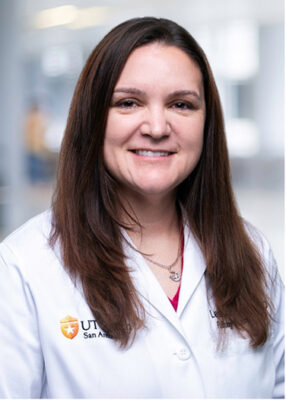 Leslie J. Greebon, MD
Pathology Residency Program Director
UT San Antonio Dept. of Pathology
7703 Floyd Curl Drive
San Antonio, TX 78229-390
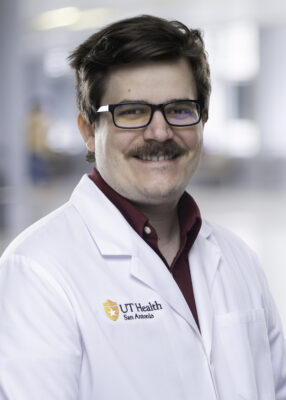 Jacob Ritter, MD
Pathology Residency Associate Program Director
UT San Antonio Dept. of Pathology
7703 Floyd Curl Drive
San Antonio, TX 78229-390
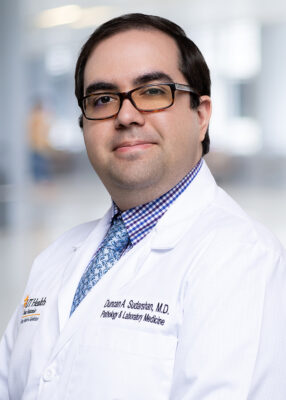 Duncan Sudarshan, MD
Pathology Residency Associate Program Director
UT San Antonio Dept. of Pathology
7703 Floyd Curl Drive
San Antonio, TX 78229-390
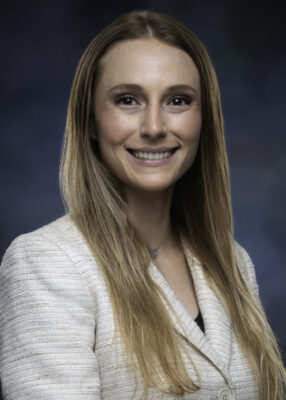 Kelsey Glassburn
Residency Program Coordinator
UT San Antonio Dept. of Pathology and Laboratory Medicine
Voice: 210-567- 4100
Connect With Us:
Stay up to date with our residency program, highlights from our residents, and life at UT San Antonio:


Follow along for program updates, resident life, educational content, and a closer look at our pathology community.
-
About San Antonio
- A modern, vibrant city, rich in heritage with colorful personality forged across three centuries. Its unique mixture of native Mexican, German and Spanish influence is noticeable in the city’s distinctive architecture, music, arts, and cuisine.
- Learn more about San Antonio
Dedicated Faculty
Our faculty members are committed to providing an outstanding education through bedside clinical teaching experiences as well as mentoring.
We provide a comprehensive curriculum that trains our graduates to be outstanding clinicians, educators and leaders in the field of Pathology.