

T32 Trainees
The NCI T32 Cancer Biology Training Program is committed to preparing the next generation of cancer researchers for successful and impactful careers. We systematically track trainee progression, research productivity, and career outcomes from entry into the program through subsequent career stages.
Current Predoctoral Trainees
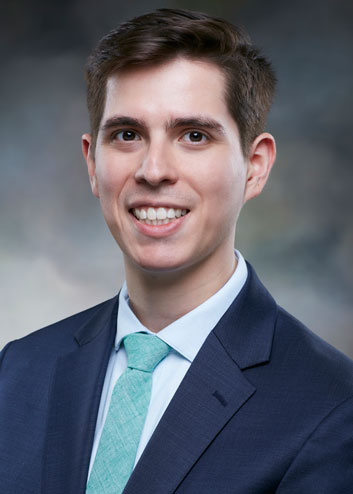
Ricardo Martinez
Training Year: Aug 2026 – Current
Mentor: Ratna Vadlamudi, PhD, Suryavathi Viswadhapalli, PhD
Research: Mechanistic and Preclinical Evaluation of HBS-101, A First-in-Class Direct Midkine Inhibitor in Hepatocellular Carcinoma
Overview: Ricardo’s research focuses on how Midkine (MDK) regulates oncogenic signaling, metabolic stress adaptation, ER stress, and ferroptosis and evaluates HBS-101 in HCC cell models, orthotopic xenografts, and patient-derived xenografts. He entered the T32 program with preliminary data demonstrating that HBS-101 reduces HCC cell viability and clonogenic growth, that MDK silencing phenocopies HBS-101 treatment, and that HBS-101 induces ferroptotic cell death. He has presented his research at the 2026 Long School of Medicine Research Symposium and prepared a first-author review on MDK that is currently under revision. Now in his second year of PhD training after passing his qualifying exam, his T32-supported research will expand his expertise in mechanistic cancer biology, drug development, bioinformatics, multi-omics, clinically relevant HCC models, and translational cancer research while strengthening his grantsmanship and clinical perspective. Ricardo’s long-term goal is to become an independently funded physician-scientist in cancer research.

Jack Prochnau
MCC Supported
Training Year: Aug 2026 – Present
Mentor: Manjeet K. Rao, PhD
Research: Identifying Mechanisms For PDAC Progression and Treatment Resistance
Overview: Before Jack’s T32 appointment, he had established a strong foundation in pancreatic ductal adenocarcinoma (PDAC) research on scaffold/matrix attachment regions (S/MARs) and their role in chromatin organization, gene expression, and tumor progression. His research focuses on the therapeutic potential of Carbazole Blue and the disruption of oncogenic protein-S/MAR interactions alters transcriptional and RNA-processing programs, induces cellular stress and DNA damage, and promotes tumor-cell death. Jack has presented at the AACR Annual Meeting and multiple Mays Cancer Center research forums, won a first-place poster award at both the Mays Cancer Center and South Texas MSTP, and the GSBS Outstanding Student Leadership Award. He has also contributed to seven peer-reviewed publications, including studies in Cancer Research, Molecular Cancer Therapeutics, and Nature Communications, and presented at national and institutional meetings. Now appointed to the T32, with support from Mays Cancer Center, Jack is continuing to advance his research on molecular vulnerabilities in PDAC while expanding his training in cancer biology and therapeutic development, with an emphasis on mechanisms underlying tumor progression and treatment resistance.
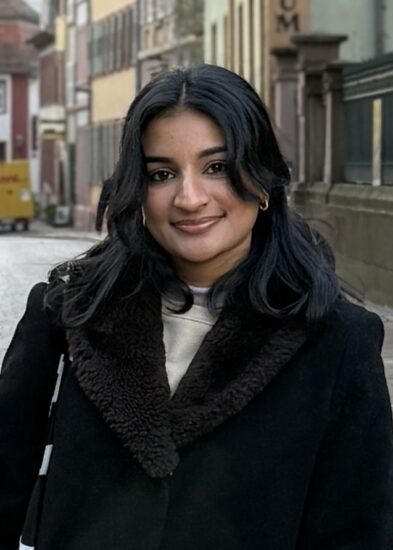
Manasa Ravi
Training Year: Aug 2026 – Current
Mentor: April L. Risinger, PhD
Research: Mechanistic Characterization of Eribulin Activity Within the Colorectal Liver Metastatic Microenvironment
Overview: Manasa’s research focuses on developing improved liver-directed therapies for colorectal liver metastases (CRLM) by defining the antitumor and immunomodulatory effects of eribulin, investigating eribulin’s effects on tumor-cell viability, epithelial-to-mesenchymal transition, cGAS-STING signaling, and liver-resident Kupffer cells, as well as the broader hepatic metastatic microenvironment. By her T32 appointment, Manasa had established eribulin dose-response profiles across colorectal cancer models, developed a modified clonogenic assay to model prolonged drug exposure and washout during hepatic artery infusion therapy, and generated preliminary data on cGAS-STING expression in CRC cells. She presented her research at the 2025 UTHSCSA Department of Pharmacology Graduate Student Symposium, 2026 Mays Cancer Center Research Symposium, and 2026 AACR Annual Meeting. Now a third-year PhD student, her T32 training will further expand her expertise in tumor immunology, primary human Kupffer-cell models, flow cytometry, liver microphysiological systems, and clinically relevant models of liver-directed therapy. Her long-term goal is to become an independent academic investigator in cancer pharmacology focused on therapeutic strategies for metastatic cancer
Current Postdoctoral Trainees
Anthony Nelligan, PhD
Training Year: Sep 2026 – Current
Mentor: Sandeep Burma, PhD, FNASc
Research: CTC1-STN1-TEN1 Complex as a Regulatory Hub Coordinating pol α-Primase and PRIMPOL Synthesis During DNA Repair
Overview: Anthony entered the T32 program after completing his PhD in Cell and Molecular Biology at the University of South Florida, with a strong background in DNA replication stress, genome stability, and DNA repair. His graduate work demonstrated that the chromatin remodeler SNFL2 suppresses replication-associated ssDNA gaps and promotes DNA synthesis, resulting in a first-author publication in Nucleic Acids Research. As he begins postdoctoral training, the T32 program will expand his expertise in protein biochemistry, reconstituted DNA synthesis, protein-DNA interactions, and biophysical methods, while strengthening his skills in grantsmanship, experimental design, scientific communication, collaboration, and mentorship. His long-term goal is to establish an independent research program focused on genome stability and therapeutically targetable DNA repair vulnerabilities in cancer.
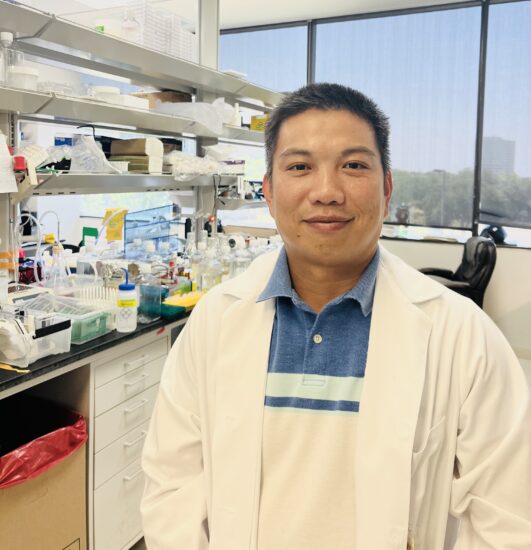
Tien Manh Tran, PhD
Training Year: Aug 2026 – Current
Mentor: Robert Hromas, MD, FACP
Research: Targeting the RPRD1B-RECQL5 Interaction for Synthethic Lethality in BRCA1-Deficient Cancers
Overview: Tien’s postdoctoral research focuses on identifying therapeutic vulnerabilities in BRCA1-deficient cancers by studying mechanisms that protect stressed DNA replication forks. His work identified RPRD1B as a key survival factor and demonstrated functioning as a scaffold to recruit DNA repair proteins to stressed replication forks through its interaction with RECQL5. He further identified phosphorylation of RPRD1B at S132 and RECQL5 at S727 as important for formation of this complex, showing that loss of RPRD1B causes replication-fork failure and mitotic abnormalities preferentially in BRCA1-deficient cells. This led to a first-author manuscript submitted to Molecular Cell. His T32 training will further develop his expertise in replication stress, DNA repair, structural biology, and drug discovery, including identifying compounds that disrupt the RPRD1B-RECQL5 interaction. His long-term goal is to establish an independent research program focused on targeting DNA repair vulnerabilities for cancer therapy.
Past Trainees
Predoctoral Trainees
Angel Dominguez
Training year: Sep 2024 – Aug 2026
Mentor: Pei Wang, PhD
Research: Develop Novel CAR-T Cells to Treat PDAC
Current Position: Postdoctoral fellow at University of Texas Heath San Antonio
Overview: Angel’s research focuses on developing CAR-T cell therapies for pancreatic ductal adenocarcinoma (PDAC) that address both tumor-antigen heterogeneity and the immunosuppressive tumor microenvironment. During his T32 training, he developed an AND-gate CAR targeting CA19-9 and CEACAM6 and incorporated IL-15SA to enhance immune activation. His engineered CAR-T cells demonstrated antigen-specific activity and promoted activation of bystander immune cells while reducing immunosuppressive macrophage polarization. Angel has contributed to four peer-reviewed publications, including a first-author study on the evolution of PDAC clinical trials, and has presented his work at multiple scientific venues. He also gained grantsmanship experience through an NCI F31 fellowship application. He continues his PhD research evaluating the CAR-T platform in vivo and expanding his expertise in cancer immunology, cellular therapy, and translational cancer reasearch.
 “Chris” Trong Phat Do, PhD
Training year: Sep 2024 – Aug 2026
Mentor: Manjeet Rao, PhD
Research: Discoidin Domain Receptor 2: A Novel Oncogene of Growth, Progression, and Immunotherapy Resistance in PDAC
Current Position: Medical resident at UT Health San Antonio Medical School
Overview: Chris’s T32-supported studies demonstrated that DDR2 promotes extracellular-matrix remodeling and pro-tumor signaling, while pharmacologic inhibition with CIDD-8633 suppressed these effects and reduced tumor growth. His research resulted in a first-author 2025 Molecular Cancer Therapeutics publication, and he contributed to four peer-reviewed publications overall, including a co-first-author review. Chris also presented his work at national AACR meetings and received several awards, including the 2025 UTHSA Senior Graduate Student of the Year Award. He completed his Ph.D. in 2026 and transitioned to medical training as an MS3 at UT Health San Antonio.
 Liujie “Jeff” Wang
Training year: Sep 2024 – Aug 2026
Mentor: Patrick Sung, DPhil
Research: Discoidin Domain Receptor 2: A Novel Oncogene of Growth, Progression, and Immunotherapy Resistance in PDAC
Current Position: Medical resident at UT Health San Antonio Medical School
Overview: Jeff’s research demonstrated that CST promotes Polα-primase-mediated second-strand DNA synthesis during BIR, advancing the understanding of DNA repair and genome stability. He developed expertise in protein biochemistry, recombinant protein purification, biochemical reconstitution, molecular cloning, and DNA repair assays. He contributed to four peer-reviewed publications, including a 2026 co-first-author paper in Nature Structural & Molecular Biology, and presented his research at multiple scientific meetings. He also pursued an NCI F30 fellowship with an impact score of 34 and received travel awards for his research.
 Jessica Johnson
Training year: Sep 2022 – Aug 2024
Mentor: Gangadhara Sareddy, PhD
Research: Targeting TNBC Brain Metastases Using a Brain-Penetrable KDM1A Inhibitor
Current Position: Clinical Bioinformatics Scientist at Eli Lilly
Overview: Jessica’s research demonstrated that KDM1A inhibition reduced tumor-cell growth, proliferation, survival, and invasion. She developed expertise in cancer epigenetics, metastasis biology, transcriptomic analysis, and preclinical drug evaluation, and contributed to seven peer-reviewed publications, including a first- and co-first-author studies. She presented her research at national meetings and has received multiple honors, including the 2024 AACR Minority Scholar in Cancer Research Award and first place in the 2024 Mays Cancer Center Research Symposium Poster Contest.
Postdoctoral Trainees
 Thi Kim Ngan Bui, PhD
Training Year: Sep 2024 – Aug 2026
Mentor: Lingtao Jin, PhD
Research: Novel Regulator of STING Signaling in NSCLC
Current Position: Postdoctoral fellow at University of Texas Heath San Antonio
Overview: Ngan identified AAK1 as a negative regulator of STING signaling and demonstrated that AAK1 loss enhances STING-TBK1 activation, interferon responses, tumor immunogenicity, antigen presentation, and CD8+ T-cell activity. Through this work, she has developed expertise in CRISPR gene editing, tumor immunology, STING signaling, intracellular trafficking, flow cytometry, and targeted protein degradation, and is preparing a manuscript based on this work. Ngan presented her research at the 2025 AACR Annual Meeting and recently submitted an American Cancer Society fellowship application. Ngan is continuing her postdoctoral research in Dr. Jin’s laboratory, investigating how AAK1-mediated STING regulation and pharmacologic strategies to enhance antitumor immunity in LKB1-deficient NSCLC.
Alejandro Casco, PhD
Training Year: Sep 2024 – May 2026
Mentor: Reuben Harris, PhD
Research: Unleashing Natural Immunity to γ-Herpesviruses
Current Position: Postdoctoral fellow at University of Texas Heath San Antonio
Overview: Alejandro’s postdoctoral research focuses on focuses on how Epstein-Barr virus (EBV) evades APOBC3B-mediated antiviral immunity and whether this immune invasion mechanism can be therapeutically targeted. During his T32 training, he developed EBV genetic and reporter systems to investigate the interaction between BORF2 and APOBEC3B, as well as tools for conditional protein depletion and real-time infection tracking. He presented his research at the 2025 Cancer Biology T32 retreat and multiple national meetings in 2026, including the International Herpesvirus Workshop and American Society for Virology Annual Meeting. Alejandro’s expanded his expertise in molecular virology, innate immunity, targeted protein degradation, and preclinical model development. His NIAID F32 fellowship application received a 3rd-percentile ranking and was funded in 2026, and has demonstrated leadership as President of the UT San Antonio Health Postdoctoral Association, Co-Chair of the San Antonio Postdoctoral Research Forum, and co-organizer of the San Antonio Virology Seminar series. Alejandro is continuing his postdoctoral research investigating EBV immune invasion and APOBEC3B-mediated viral restriction.
Jacqueline Williams, PhD
Training Year: Aug 2022 – Aug 2024
Mentor: Reuben Harris, PhD
Research: Studies Using a Murine Model For Tumor Formation By Human APOBEC3A
Current Position: Postdoctoral fellow at University of Texas Health San Antonio
Overview: Using a Fah-deficient murine liver cancer model, Jacqueline developed a targeted protein-degradation approach in which APOBEC3B was engineered with an FKBP12F36V degron and established stable APOBEC3B expression systems for evaluation in the liver cancer model. Through this work, she expanded her expertise from virology and transcriptional regulation into cancer mutagenesis, targeted protein degradation, molecular cloning, cell-based essays, and in vivo cancer modeling. Jacqueline presented her research at the 2023 San Antonio Postdoctoral Research Forum and 2024 NCI T32 Annual Research Retreat and also submitted an NIH F32 Fellowship application in 2024.
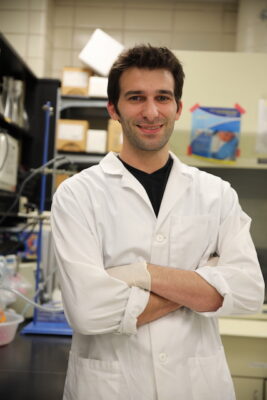 Jason Hadley, PhD
Training Year: May 2023 – Mar 2025
Mentor: Lily Dong, PhD
Research: ABHD17B Regulates Macrophage Activation to Limit Hepatic Inflammation And HCC Development
Current Position: Field Application Scientist at Miltenyi Biotec Inc.
Overview: Jason’s research showed that ABHD17B deficiency altered hepatic lipid distribution, shifting lipid accumulation from zone 3 to zone 2, and increased serum ALT levels in Western diet-fed mice, consistent with earlier liver injury. These findings supported ABHD17B maintaining liver metabolic homeostasis and limiting macrophage-driven inflammation. Through his T32 fellowship, Jason expanded his expertise in macrophage biology, protein palmitoylation, lipid metabolism, metabolic liver disease, and cancer-related inflammation. He contributed to a 2025 Diabetologia publication and advanced a first-author manuscript on ABHD17B deficiency, obesity, and inflammation that is under revision at Nature Communications.
 Francisca M. Acosta, PhD
Training Year: Aug 2020 – July 2022
Mentor: Jean X Jiang, PhD
Research: Connexin Channels in Bone Osteocytes in Suppressing Cancer Metastasis
Current Position: Assistant Research Professor in Department of Medicine (Endocrinology) at UT Health San Antonio
Overview: Francisca received multidisciplinary training in cancer biology and translational science, while developing expertise in flow cytometry, animal models, and mechanical testing. Her research focused on the role of osteocytic connexin 43 (Cx43) hemichannels in regulating local and systemic metabolic microenvironments and their contribution to breast cancer progression, demonstrating their contribution to the modulation of adipose tissue in both medullary and extramedullary depots. During her T32 fellowship, Francisca received publications in Cells, Cancers, and STAR Protocols, and contributed as a co-first author publication for the Journal of Tissue Engineering. Francisca also submitted an NIH F32 fellowship in 2021, was awarded an NCATS TL1 fellowship in 2022, and received the International Gap Junction Conference Emerging Star Award in 2022, the May’s Cancer Center Research Symposium Best Postdoctoral Fellow Poster Presentation in 2022, and Postdoc of the Day Designee in 2021.
Michael Wetzel, PhD
Training Year: Nov 2020 – Jan 2021
Mentor: Zhijie Liu, PhD
Research: The Regulation of HOX Gene Expression
Current Position: Senior Scientist at BioStone Animal Health LLC
Overview: Michael received his PhD in Cellular and Molecular Biology at The University of Texas Medical Branch in 2017 before joining Dr. Liu’s lab, and is a co-author to “Pontin Functions as A Transcriptional Co-Activator for Retinoic Acid-Induced HOX Gene Expression,” that was published in the Journal of Molecular Biology in 2021. Although Michael was with the T32 fellowship for a short time, he gained valuable experience in bioinformatics and contributed to research examining the regulation of HOX gene expression, demonstrating the Pontin functions as a transcriptional co-activator in retinoic acid-induced HOX gene expression. Contributing to the understanding the mechanisms that regulate developmental gene programs and potentially understanding aberrant transcriptional regulation in cancer.
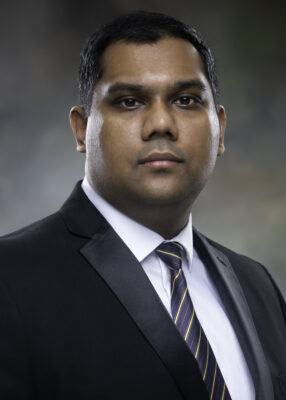 Mustafa Khan, MD
Training Year: July 2020 – June 2022
Mentor: Zhenming Xu, PhD
Research: Regulatory B Cells in Human Breast Cancer
Current Position: Surgery Resident at The University of Texas Health Science Center at Houston
Overview: Mustafa’s research focused on understanding how estrogen receptor-postive (ER+) and triple negative breast cancer (TNBC) evades or manipulates the immune system, with a particular emphasis on the role of B cells and B cell-produced interleukin-27 within the tumor microenvironment. On the research track of the surgical residency program, Mustafa received hands-on training in cancer biology, tumor immunology, and translational breast cancer research. He also presented research at the American Association for Cancer Research Annual Meeting and at the J. Bradley Aust Surgical Society Resident Paper Competition