

Gastroenterology Fellowship

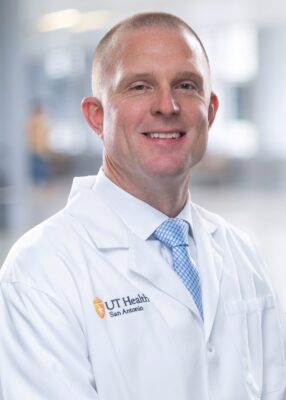
Message from the Fellowship Program Director
The Division of Gastroenterology & Nutrition appreciates your interest in the Gastroenterology Fellowship Program at University of Texas at San Antonio, UT San Antonio.
The main focus of the Gastroenterology Fellowship program at the University of Texas at San Antonio, UT San Antonio, is to provide outstanding clinical training in Gastroenterology and Hepatology, supported by experienced faculty in multiple training sites that serve the San Antonio metropolitan area and Bexar County community, the South Texas Veterans, and a large, underserved population in South Texas. In partnership with The University Health System, the Audie L. Murphy Memorial Veterans’ Hospital, and the newly opened UT Multispecialty and Research Hospital (MSRH), our Gastroenterology fellowship offers exposure to a diverse spectrum of pathology and endoscopic procedures in 3 hospitals, 3 ambulatory surgical centers, and numerous clinical facilities. Extensive general gastroenterology experience and world-class advanced endoscopy and hepatology exposure are combined with a robust didactic schedule as we strive to educate health care providers into becoming exceptional Gastroenterologists. Our mission statement aligns with the University of Texas at San Antonio, UT San Antonio and Long School of Medicine objectives to make lives better through excellence in education, research, health care and community engagement.
Our goal is to train physicians who aspire to be both thoughtful, astute diagnosticians and expert endoscopists who will leave our program prepared for success in any practice environment.
Our fellows are well-versed in management of both common and advanced disease states, and pursue post-training opportunities in many practice environments including academic positions, employed and private practices, as well as additional training in advanced endoscopy or transplant hepatology. We seek to recruit the highest quality of applicants and invite you to give our training program your serious consideration.
About our Fellowship Program Structure
The Division of Gastroenterology & Nutrition at University of Texas at San Antonio, UT San Antonio offers a fully accredited three-year fellowship training program in Gastrointestinal Diseases designed according to guidelines for training in Gastroenterology put forth by the American Board of Internal Medicine (ABIM), the Accreditation Council for Graduate Medical Education (ACGME), and by the Gastroenterology Core Curriculum directive of the American College of Gastroenterology (ACG), American Gastroenterological Association (AGA), the American Society for Gastrointestinal Endoscopy (ASGE), and the American Association for the Study of Liver Diseases (AASLD).
Our goal is to provide outstanding and comprehensive care to our community via core training in consultation and endoscopy at three major training facilities including University Hospital (University Health System), the Audie L. Murphy Memorial Veterans’ Hospital and the state-of-the art UT Multispecialty and Research Hospital (MSRH), which just opened in December 2024.
Core training in our fellowship is composed of rotations that cover the spectrum of clinical gastroenterology and hepatology. We offer a specialized and unique diagnostic and therapeutic approach to both inpatient and outpatient consultations, and a broad array of screening, diagnostic and therapeutic endoscopic procedures, as well as specialized motility procedures. Through our partnership with the Texas Liver Institute (TLI), world leaders in the management of advanced liver disease, fellows receive expert training in the management of acute and chronic liver disease including inpatient and outpatient consultation as well as longitudinal care for the patient both pre- and post-liver transplant.
Fellows will have the opportunity to gain further experience in selected subspecialties such as advanced endoscopy (including exposure to ERCP, EUS, and the full spectrum of advanced endoscopic procedures), inflammatory bowel disease, bariatric endoscopy, nutrition, and specialized esophageal/motility practice. Fellows will also have the opportunity for electives in other pertinent specialties including GI radiology, pediatric gastroenterology, colorectal surgery, oncology, women’s health, and artificial intelligence, all with renowned and invested faculty.
Our goal is for our trainees to successfully complete the ABIM certifying examination in Gastroenterology with our support, mentorship, and commitment to the highest degree of fostering professionalism and academic preparation.
Training by the year
The first year of the fellowship focuses on an introduction to endoscopy and consultative gastroenterology and hepatology in the inpatient and outpatient settings with a weighted emphasis on inpatient training. The second and third-year curriculum broadens to include continued training in endoscopy and consultative services while also including opportunities to participate in electives across multiple fields of subspecialty. There are expectations and ample opportunities to develop and complete clinical research, quality improvement projects, and other scholastic activities in both undergraduate and graduate medical education. Fellows also receive training in up-to-date technology including interpretation of high-resolution esophageal manometry, pH-impedance testing, esophageal wireless pH studies, functional lumen imaging probe (FLIP), wireless capsule endoscopy, breath hydrogen studies, and anorectal manometry. Fellows in the program will gain exposure to ERCP, EUS, and other advanced endoscopic procedures, but will not be trained to competency in these procedures, which requires an additional year of clinical training that is also offered as a (competitively recruited) fourth-year option at our institution.
On Call Schedule
In regard to the call schedule, no in-house call is required during the Fellowship Program. Fellows provide home call for clinical emergencies during weeknights and weekends. Averaged across the three years, a fellow will have weekend call in one of our 3 hospitals approximately every 5-6 weeks. The duty hours and call schedule conform to the requirements of the residency review committee of the ACGME.
Conferences & Rotations
There are weekly mandatory conferences that include the Fellows’ rotating conference topics (Journal Club, Board Review, Guideline Review, Advanced Endoscopy Series, Guest Speakers’ Series), Morbidity and Mortality, GI Radiology Conference, GI Pathology Conference, Core Curriculum Conference Series, Grand Rounds, and interactive faculty and fellow case presentation conferences, for a total of four-five hours of conferences per week. Additional highlights include hands-on sessions to learn basic and novel procedures, live endoscopy case presentations, and specialized conferences such as pancreaticobiliary tumor board and liver transplant selection committee. Each fellow is encouraged and financially supported to attend at least one national academic conference per year as a presenter and attendee and we also attempt to support trainee attendance for top-tier away rotations to heighten exposure to specialty areas of interest.
Fellowship Administration
| Name | Title | Telephone # | |
|---|---|---|---|
| C. Brock Miller, MD | Program Director | millercb@uthscsa.edu | 210-567-4880 |
| Ailene Alcaraz | Senior Program Coordinator | alcaraz@uthscsa.edu | 210-567-4928 |
Fellowship Structure
- How to apply – Application Information
- Current Fellows
- Training Sites
- Didactics
- GME Compensation and Benefits
- Accredited ACGME Transplant Hepatology Fellowship
- Non-ACGME Transplant Hepatology Fellowship
- Advanced Endoscopy Fellowship
- Fellowship Program Clinical Activities
- Training by the year
- On Call Schedule
- Conferences & Rotations
 Living in San Antonio
A modern, vibrant city, rich in heritage with colorful personality forged across three centuries. Its unique mixture of native Mexican, German and Spanish influence is noticeable in the city’s distinctive architecture, music, arts, and cuisine.
Featured Fellow: Gloria Erazo Montalvan, MD
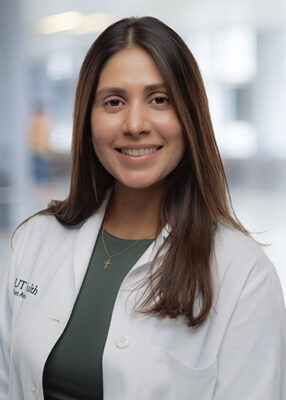
GI Fellow – PGY4
I would highly recommend the UT Health San Antonio GI fellowship because of the incredibly supportive co-fellows and faculty. Everyone has been welcoming since day one. The program offers diverse clinical exposure, like AE, transplant hepatology, along with strong hands-on endoscopy training. More than anything, it feels like more than just a team, it feels like family
Featured Fellow: Daniel Guifarro Rivera, MD
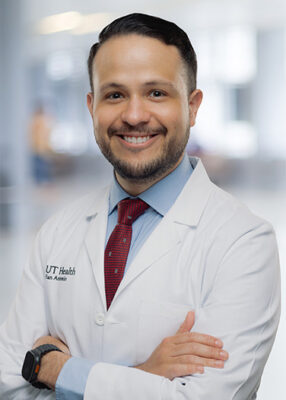 GI Fellow – PGY4
Our program has been AMAZING throughout the entire process including the interviewing, the post-match months and now with the start of fellowship. Everyone is very supportive, easy going and it truly feels like a family. The senior fellows have been so helpful during this transition and made us feel part of the team since day 1. This is truly a place where you can thrive, and it continues to grow and expand in multiple areas. Exciting things happening in UT San Antonio!