

Rotation Schedule
Rotation Schedule
The details below list out the various rotations that will take place during the fellowship.
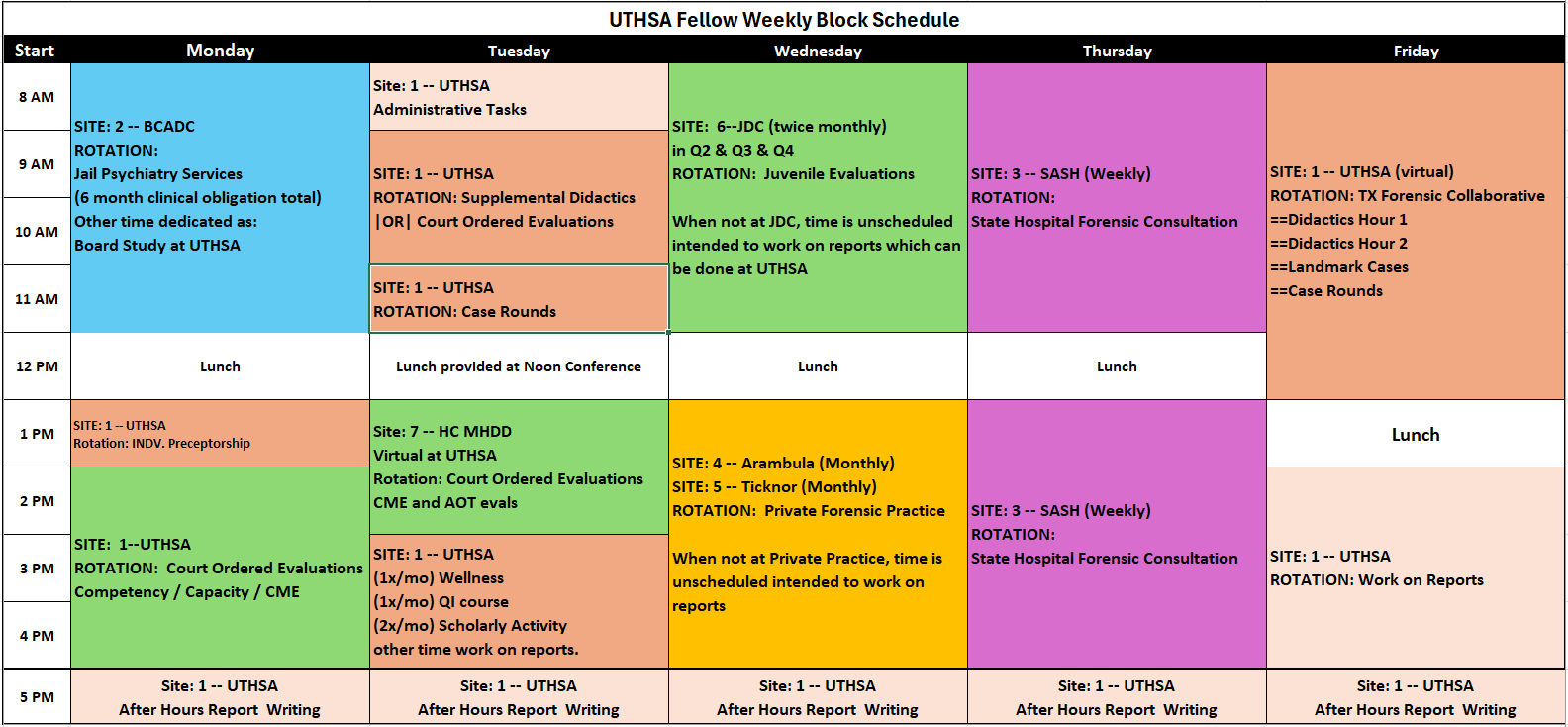

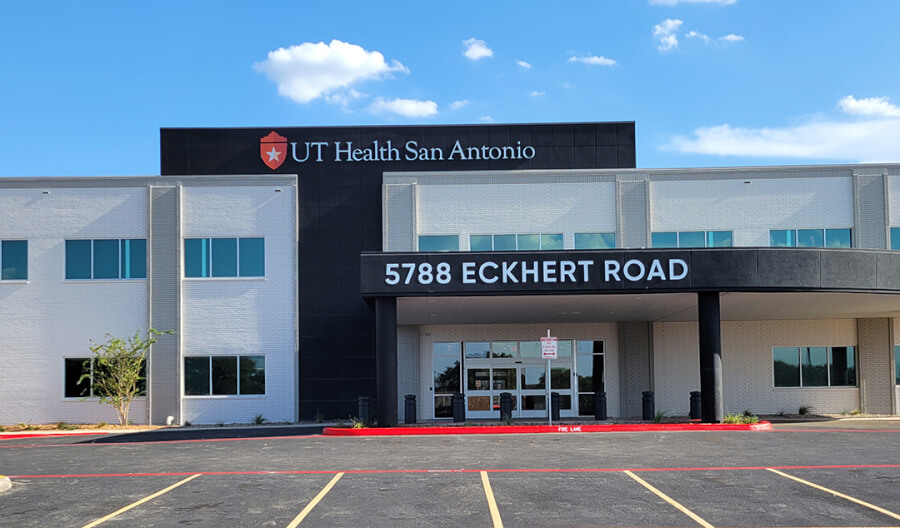
Few fellowships offer the breadth of court-ordered evaluation experience available here. Working through the Bexar County Magistrate Court, fellows step into the role of the court’s expert from day one, with graduated supervision and a caseload deep enough to build genuine mastery.
Fellows conduct competency to stand trial evaluations across the full continuum of settings: the Bexar County Adult Detention Center (BCADC), in-jail competency restoration programs (JBCR), and with individuals released on bond seen at UT Health San Antonio. Fellows also perform supervised telepsychiatry evaluations for surrounding county jails, gaining fluency in a modality that is rapidly becoming standard practice in forensic work. This breadth is intentional. Rather than seeing competency in a single setting, fellows learn how context shapes the evaluation and how to write an opinion that holds up regardless of where the defendant sits.
The rotation also provides substantive civil forensic exposure. Fellows evaluate individuals for appropriateness for Assisted Outpatient Treatment (AOT), learn to draft persuasive Certificates of Medical Examination, and provide occasional courtroom testimony in these cases. Fellows regularly graduate with real testimony under their belt, not simulated practice.
In the second half of the year, fellows add juvenile court-ordered evaluations at the Juvenile Detention Center, working with a population that demands its own developmental and legal framework.
Criminal responsibility evaluations, presentence evaluations, and dangerousness assessments are assigned case by case as fellows demonstrate readiness. Graduates finish the year having conducted a high volume of evaluations across criminal, civil, and juvenile settings, and having written reports and testified in real proceedings. They leave prepared to take a referral from any court, in any setting, and produce an opinion that stands.
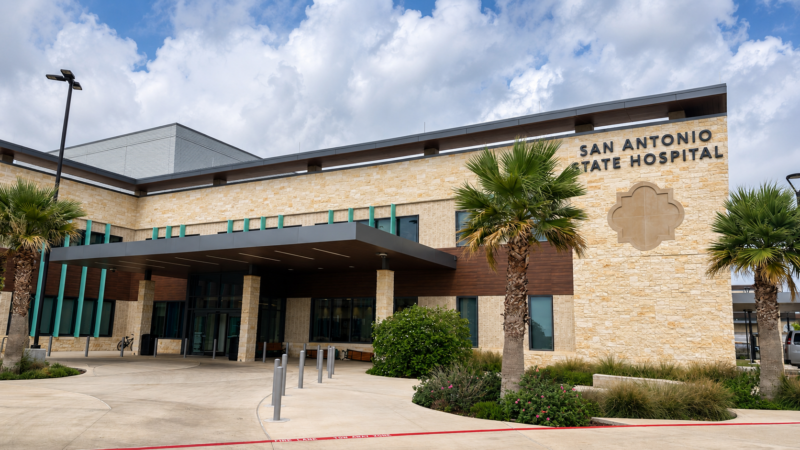 Our program occupies a rare location that sits between two Texas state hospitals, giving fellows access to the forensic inpatient population for competency and sanity cases. Fellows spend one full day per week for twelve months at San Antonio State Hospital (SASH), providing forensic consultation and evaluation for patients committed to the forensic service. A full year of longitudinal exposure means fellows see cases evolve, not just snapshots.
At SASH, fellows are assigned competency to stand trial and criminal responsibility evaluations, and develop genuine facility with the structured assessment instruments that underpin credible expert opinions. Fellows learn to administer, score, interpret, and integrate the standardized measures used across the core forensic domains: competency to stand trial, malingering and response style, violence risk, and sexual recidivism risk.
This is hands-on instrument training, not a lecture series. Fellows finish the year able to select the right instrument for the referral question, defend that selection, and explain the results to a court. It is what separates an expert whose opinion survives cross-examination from one whose does not.
Fellows may also elect an experience at Kerrville State Hospital (KSH) evaluating patients adjudicated Not Guilty by Reason of Insanity. There, fellows perform violence risk assessments for the dangerousness review board and for decisions regarding release and transition to community treatment, working at the intersection of clinical judgment, public safety, and the law.
The schedule is subject to change at the discretion of the Program Director based on case availability.
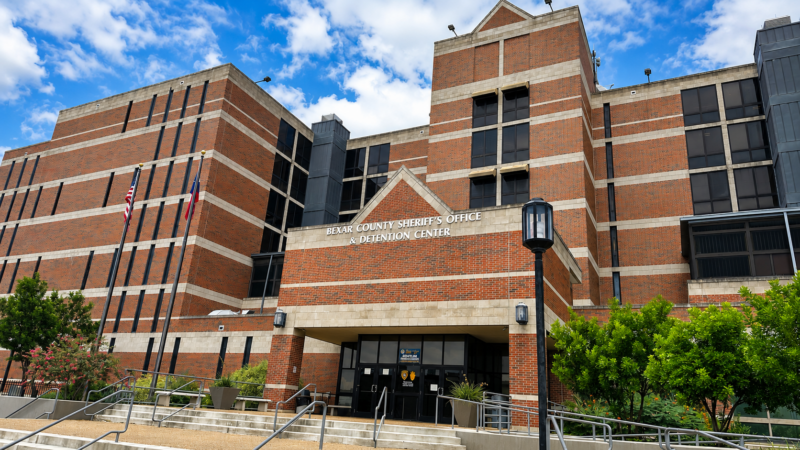 Correctional psychiatry sits at the center of forensic practice, and our fellows learn it where it actually happens: inside the Bexar County Adult Detention Center (BCADC), a roughly 5,000-bed facility that routinely operates near capacity and that county leadership has publicly identified as carrying a high volume of detainees with serious mental illness. The clinical need here is real, and fellows are part of meeting it.
For six months, fellows carry a longitudinal panel of patients one half-day per week. They perform initial psychiatric evaluations on new intakes, follow those same patients over time, and manage psychiatric illness in the general population. This continuity matters. Rather than rotating through as observers, fellows own their patients from intake through stabilization, seeing directly how their clinical decisions play out in a correctional environment.
Fellows provide medication management for detainees referred for psychiatric evaluation, learning to practice effective psychiatry within the real constraints of a jail: formulary limits, security considerations, unpredictable lengths of stay, and the ever-present question of malingering. These are skills that cannot be learned in a clinic.
Supervision progresses with competence. Fellows begin under indirect supervision as they orient to the jail system, its culture, and its operational realities. As their clinical skills advance, supervision transitions to oversight, and fellows finish the rotation practicing with the independence expected of a correctional psychiatrist.
Fellows leave prepared to step into a correctional psychiatry role anywhere in the country, and with the clinical grounding that makes their forensic evaluation work sharper.
Most forensic psychiatry programs prepare fellows to work for the court. Ours also prepares them to build a practice.
Fellows rotate directly with practicing forensic psychiatrists, spending at least two hours every other week observing and participating in active private practice cases. This is not shadowing. Fellows work real matters alongside the retained expert, from referral through opinion.
The rotation is built around mentorship in the transition to independent forensic practice. Fellows discuss active cases with the expert handling them, observe depositions and testimony as they occur, and prepare parallel reports that are then compared against the expert’s own work. That side-by-side comparison is where the craft is learned: what to include, what to leave out, and what makes an opinion hold up when it is challenged.
Case exposure spans the civil questions fellows will actually encounter in practice, including personal injury litigation, psychiatric disability determinations, psychiatric malpractice, guardianship, and testamentary capacity.
Fellows leave with a working understanding of how a private forensic practice actually operates, and with mentors who remain a resource well beyond graduation.
Board certification is the foundation of expert credibility. A forensic psychiatrist who is not board certified in general psychiatry could have it brought up on cross-examination. We build that reality into the schedule rather than leaving fellows to find study time on their own. Fellows sitting for the general psychiatry boards in September receive protected time during Quarter 1 to prepare. This is dedicated, scheduled time, not a promise to be flexible.
After the September examination, fellows redirect that time toward quality improvement work. Fellows complete a structured quality improvement curriculum, delivered in collaboration with our general psychiatry residency program, that teaches the full arc of a project: identifying a problem worth solving, designing an intervention, measuring what changed, and presenting the result. Fellows then carry out their own project, with the option to pursue a question rooted in the forensic and correctional settings where they train.
The year concludes with a mock Root Cause Analysis, in which fellows work alongside the attending to facilitate the exercise and drive the discussion. By that point, fellows have accumulated enough forensic and correctional experience to see what a purely clinical team would miss, and they help lead accordingly. It is a fitting capstone: the fellow has moved from trainee to the person in the room whose analysis others rely on.
Elective time is built into the schedule, not carved out of it. The purpose is to let fellows go deeper in the areas of forensic practice that interest them most, and to graduate with a portfolio no two fellows share.
Established elective experiences include:
- Transition to Private Practice
- Juvenile evaluations
- Military evaluations
- Veteran evaluations
- Geriatric evaluations, including guardianship cases
- Auditing a law school course
- Fellows are encouraged to design their own. If a fellow wants an experience that does not yet exist, the program’s expectation is that they build it.
How electives work. Fellows own their elective time. To begin an elective, a fellow submits an Elective Description Form to the Program Director for approval at least two weeks before the start date. Because credentialing, site agreements, and supervisor schedules take time, fellows are strongly encouraged to begin planning several months in advance. Every elective must demonstrate compliance with ACGME forensic psychiatry requirements and receive Program Director approval before it begins. A fellow who does not submit an elective plan before their assigned elective time will be placed in a core rotation or an established elective at the Program Director’s discretion.
Elective time is protected educational time and is not intended for catching up on reports. The Program Director may convert elective time to unscheduled time when a fellow’s workload requires it, but that is an exception, not the design.
Most forensic fellowships offer one year, one schedule, one path. We are building something different.
In March 2026, the State of Texas awarded $5 million in grants to expand forensic psychiatry fellowship training, administered through the Texas Higher Education Coordinating Board. Our program is a recipient. That funding is what allows us to build specialty tracks rather than run a single fixed schedule, and it reflects a broader legislative commitment: Texas has determined that its courts, jails, and state hospitals need more forensic psychiatrists, and the state is investing accordingly. Fellows train here at a moment when both the demand for their expertise and the resources behind their training are expanding.
Fellows discuss track options with the Program Director before the fellowship begins and must declare their intent to pursue a track no later than May preceding the start of the fellowship year. Fellows who choose not to pursue a formal track still access every one of these areas through elective time.
Military Track
- Designed for fellows currently serving in the military, or planning a career with the VA after graduation. The track centers on working directly with Air Force forensic psychiatrists on military-specific cases.
- Military forensic questions carry their own legal framework, their own culture, and their own evidentiary demands. This track builds fluency in all three.
Child and Adolescent Forensic Track
- Available to fellows who completed a child and adolescent psychiatry fellowship before starting the program.
- The Jail Psychiatric Services rotation relocates from the Bexar County Adult Detention Center to the Bexar County Juvenile Detention Center, and the caseload shifts toward child and adolescent forensic evaluations within the juvenile justice system, including minors under 14.
- For the dual-boarded psychiatrist, this is a rare chance to combine both credentials into a single, cohesive expertise.
Forensic Treatment Track
- For fellows who want depth in treating the forensic population, not only evaluating it. One court clinic half-day is converted to treatment of jail-based competency restoration (JBCR) patients found incompetent to stand trial, and the fellow continues treating detainees at BCADC for the full year rather than the required six months.
- At San Antonio State Hospital, the fellow joins the treatment team on a unit caring for patients outside their own evaluation caseload, observing how forensic inpatient care is delivered across a long admission.
- The fellow may assist with treatment during that time, gaining direct insight into caring for patients within the state hospital system.
- Fellows finish this track prepared to lead a competency restoration program or a forensic inpatient service.